Chord Tones
Release 2026.01.30
Chord Tones
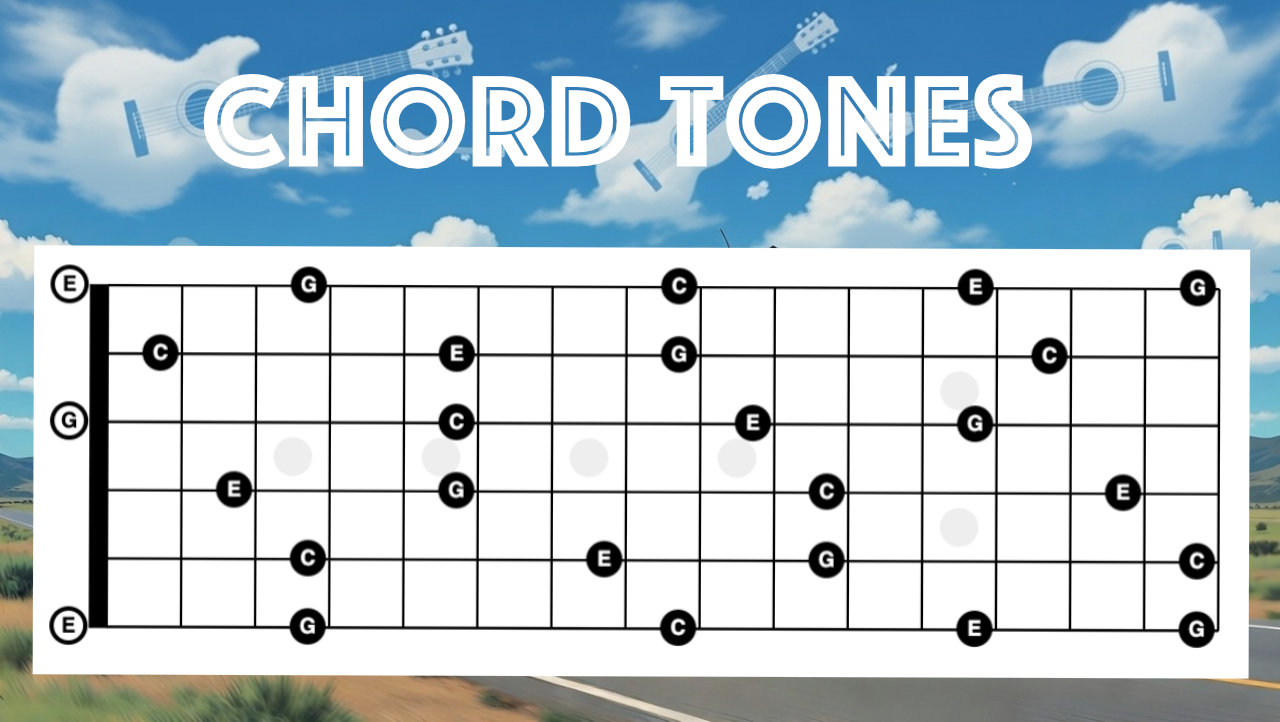
Chord tones are simply the notes that make up a chord (also called "chord members" or "harmony tones"). When musicians talk about chord tones in the context of soloing or composing melodies, they're usually referring to the desirability of choosing notes from (or strongly related to) the current chord to create melodies that feel natural, strong, and harmonically connected to the backing progression.
How to Use Chord Tones
Being aware of chord tones is one of the fastest ways to improve your melodies and lead lines over a chord progression. Many players struggle with solos that sound like aimless scale runs or generic "scale practice." Targeting chord tones helps break that habit, giving your phrases a clear harmonic purpose and making them sound more musical and intentional.Classic Example: Start with the 3rdOne of the easiest and most effective places to begin is by targeting the 3rd of each chord—the note a third above the root.
For a major chord, that's a major 3rd (4 half steps / frets above the root).
For a minor chord, it's a minor 3rd (3 half steps / frets above the root).
Why this works so well
The 3rd is the most defining note in a chord—it determines whether the chord sounds major (bright, happy) or minor (darker, sadder). By emphasizing or landing on the 3rd in your melody (especially on strong beats), you directly highlight the character and emotional shift of the chord progression. The result is usually a much more expressive, "inside," and pleasant-sounding line.
Coming Soon
In the near future, the fretboard diagram tool will be updated with multiple display options (similar to what's already available for chord diagrams). This will let you view notes on the fretboard as intervals (relative to the chord's root, e.g., 1, 3, 5, b7, etc.) instead of just absolute note names—making it much easier to visualize and target chord tones across different keys and chord qualities.